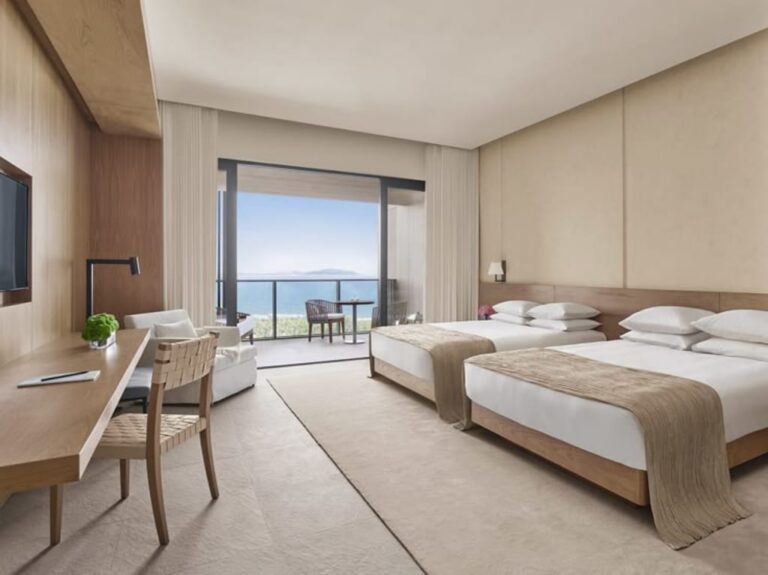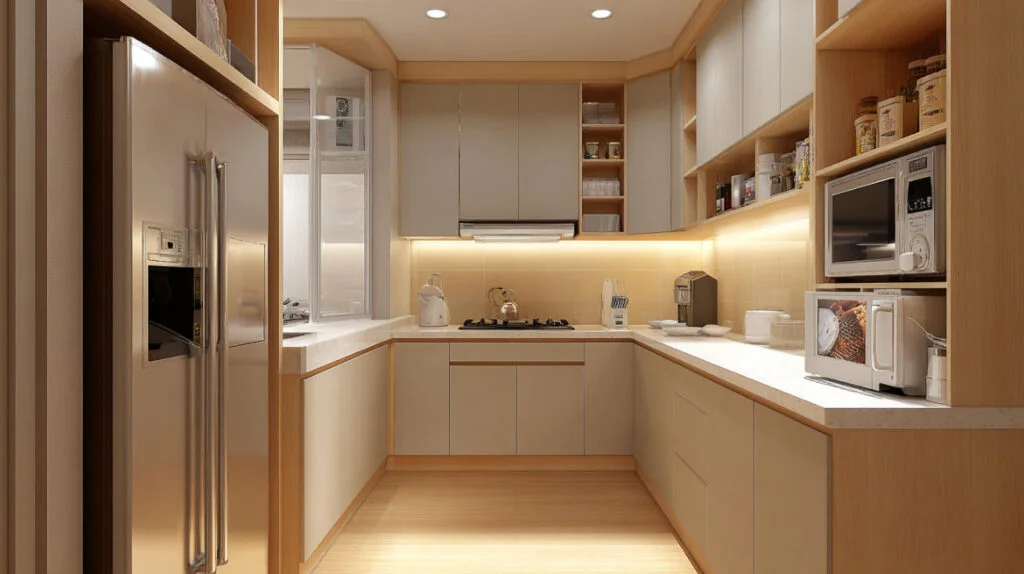
Apartment Hotel Kitchen Ideas: Master Extended-Stay Design
The structural evolution of modern extended-stay hospitality reflects a profound transformation in how temporary occupants consume domestic space, prepare food, and manage daily nutrition. For generations, traditional hotel architecture maintained an unyielding design geometry: sleeping quarters designed for short-term transients, characterized by compressed square footage, centralized dining facilities, and a complete absence of domestic cooking infrastructure. As multi-week professional assignments, medical relocations, and digital nomad lifestyles expand, this legacy model has encountered severe functional friction. Standard hotel rooms force travelers into perpetual restaurant dependency, inducing acute dietary fatigue, severe financial strain, and a total absence of personal culinary autonomy.
This operational and psychological impasse has cemented hybrid residential hospitality assets—specifically serviced apartments and aparthotels featuring fully functional cooking facilities—as the definitive infrastructure for modern extended travel. Evaluating this sector requires moving past promotional marketing gloss to inspect how vertical plumbing coordination, fire suppression safety, multi-zone counter ergonomics, and commercial-grade appliance durability intersect. Identifying optimal apartment hotel kitchen ideas demands an analytical framework capable of distinguishing genuine domestic adaptability from clever aesthetic styling. Whether an institutional portfolio manager evaluates asset retrofitting yields, an interior architect designs high-density floor plates, or a traveler plans a multi-month relocation, understanding the systemic mechanics of compact culinary spaces is indispensable.
Navigating this domain requires a comprehensive reference manual that strips away surface-level distinctions to evaluate economic drivers, spatial strategies, and operational vulnerabilities. The following analysis provides an exhaustive breakdown of the sector, exploring structural classifications, real-world deployment scenarios, cost dynamics, and long-term asset governance without resorting to simplistic generalities.
Understanding Apartment Hotel Kitchen Ideas
Semantic Ambiguity and Typological Fragmentation
Constructing an accurate evaluation of apartment hotel kitchen ideas requires navigating profound semantic ambiguity across the global real estate and hospitality markets. Industry observers frequently conflate basic wet bars, dormitory kitchenettes, residential full-scale kitchens, and modular aparthotel cooking pods under a single umbrella, obscuring massive variances in structural safety, appliance power ratings, and spatial ergonomics. A common misunderstanding assumes that culinary suitability correlates directly with raw linear counter footage or high-end stone finishes, ignoring critical micro-level architectural variables. These variables include ventilation duct routing, dedicated 220V circuitry for induction cooktops, grease trap maintenance accessibility, and under-counter refrigeration capacity.
Structural Ergonomics Over Surface Aesthetics
True professional assessment demands analyzing how physical architecture and back-of-house operational models intersect to support extended-stay domestic life. Properties that achieve dominance in this sector do so through robust spatial zoning, resilient finish materials that withstand heavy daily wear, and flexible appliance configurations that accommodate diverse culinary traditions. Consequently, evaluating top-tier options means looking past promotional photography to assess structural soundproofing, mechanical ventilation efficiency, and spatial zoning. Misjudging these architectural factors leads to high operational friction, indoor air quality degradation, and a compromised travel experience.
Deep Contextual Background
Historically, the commercial hospitality industry developed around the needs of the individual business traveler and short-term tourist. Architectural designs prioritized high room counts per floor, centralized dining operations, and minimal in-room plumbing stacks to reduce construction costs and maximize daily turnover. Developers intentionally omitted cooking ranges to protect hotel food-and-beverage revenues, eliminate fire hazards, and prevent persistent food odors from permeating adjacent guest inventory.
The rapid decentralization of work, combined with the rise of multi-month project assignments and extended domestic exploration, permanently disrupted this traditional segregation. Travelers began demanding the comforts of home—such as full-scale refrigeration, multi-burner cooktops, and dishwashing capacity—combined with the security and flexible booking terms of commercial hotels. Real estate developers and major hospitality brands responded by engineering purpose-built hybrid assets. Over subsequent decades, this market matured into a sophisticated sector that bridges the gap between residential autonomy and professional hospitality management.
Conceptual Frameworks and Mental Models
Successfully evaluating and categorizing top-tier extended-stay culinary spaces requires deploying rigorous analytical frameworks during site assessment and planning phases.
1. The Thematic Workflow Efficiency Index
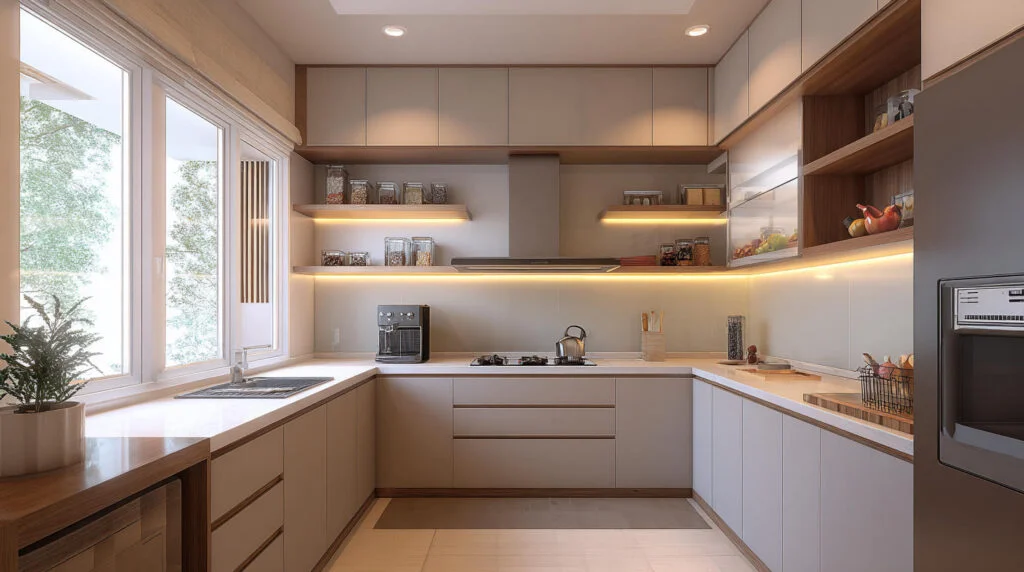
This mental model evaluates the spatial relationship between the primary preparation surface, the cooking zone, and the refrigeration unit. Traditional linear kitchenettes often violate the classic work triangle, creating physical congestion. Top-tier properties implement compact parallel or L-shaped micro-layouts that minimize unnecessary movement during meal preparation.
2. The Mechanical Load and Ventilation Ratio
Unlike standard residential kitchens where cooking is sporadic, aparthotel kitchens experience high-frequency, multi-tenant usage patterns. This model calculates the volume of grease-laden vapor generation against the static pressure capacity of centralized or ducted exhaust systems to prevent indoor air contamination.
3. The Durability-Safety Equilibrium
Family and extended-stay travel introduce high-frequency physical wear and unique safety hazards, ranging from unmonitored burner surfaces to water overflow risks. This framework measures how effectively a property combines commercial-grade material durability with child-safe and fire-safe architectural detailing without sacrificing aesthetic sophistication.
Key Categories and Operational Variations
The domestic landscape of hybrid accommodation culinary spaces comprises several distinct structural and operational archetypes, balancing capital allocation against target user demographics.
| Kitchen Category | Structural Architecture | Primary Target Demographic | Operational Trade-off |
| Integrated Concealed Pods | Pocket doors, retractable induction cooktops, mini-fridge | Short-to-medium-term business travelers | Limited prep surface; restricted large-scale cooking |
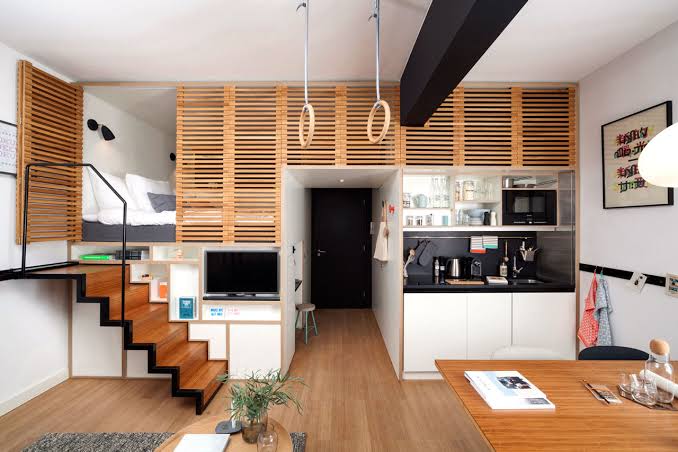
| Linear Extended-Stay Kitchens | Single wall, full-size sink, under-counter fridge/oven combo | Project contractors, medical fellows | Restricted multi-person movement; minimal pantry storage |
| L-Shaped Aparthotel Suites | Corner configuration, wrap-around quartz counters, dishwasher | Relocating families, long-term digital nomads | Higher construction cost; complex plumbing integration |
| Boutique Chef-Grade Islands | Central freestanding island, induction cooktop, bar seating | Culinary tourists, extended-stay executives | Occupies significant floor space; limits living area |
| Modular Micro-Kitchenettes | Plug-and-play convection microwave, induction plate, bar sink | Minimalist digital nomads, budget aparthotels | Complete absence of traditional oven or dishwasher |
| Multi-Zone Residential Blocks | Full walk-in pantry, double-door fridge, convection range | High-net-worth diplomats, multi-month guests | Prohibitive capital expenditure; high maintenance overhead |
Realistic Decision Logic
Selecting an appropriate kitchen configuration requires aligning household travel requirements with length-of-stay velocity and regional geography. For short professional assignments lasting under two weeks, integrated concealed pods offer sufficient functionality for simple breakfast preparation without wasting valuable room footprint. Conversely, multi-month relocations demand robust L-shaped or linear extended-stay kitchens equipped with full-size refrigerators, dishwashers, and convection ovens. Travel planners must weigh these structural trade-offs against household budget limits and specific daily routine requirements.
Detailed Real-World Scenarios
1. The Extended Corporate Relocation
A senior financial executive relocates for a six-month corporate integration project, requiring an apartment featuring robust domestic capabilities. The executive leases an upscale aparthotel suite boasting a linear extended-stay kitchen with quartz countertops and a full-size dishwasher. However, choosing a unit where the ventilation hood recirculates indoor air rather than venting externally results in persistent cooking odors accumulating throughout the living quarters, illustrating the importance of ducted exhaust verification.
2. The Tech Consultant Team Sprint
Three software consultants share a multi-room aparthotel during a three-week development sprint, relying on home-cooked meals to manage dietary restrictions. They select a property featuring an L-shaped kitchen layout with an open-concept bar counter. Crucially, failing to verify the electrical panel capacity leads to repeated circuit breaker trips when running the convection microwave and electric kettle simultaneously during morning peak hours.
3. The Culinary Explorer’s Urban Stay
A passionate home cook books a month-long stay in a cultural capital, intending to experiment with local ingredients purchased from neighborhood markets. The selected boutique aparthotel features a compact concealed pod kitchen with a single-burner induction plate and an undersized refrigerator. The absence of adequate counter space and freezer capacity severely limits culinary experimentation, highlighting the necessity of matching spatial design to actual use cases.
4. The Medical Fellowship Long-Stay
A surgical fellow and partner secure a three-month extended-stay apartment near a major hospital complex, prioritizing strict nutritional meal preparation. They occupy a unit equipped with a commercial-grade induction cooktop, convection oven, and silent dishwasher. Conversely, neglecting to inspect the under-sink plumbing leads to an undetected slow leak that damages adjacent cabinetry, emphasizing the critical need for rigorous maintenance oversight.
Planning, Cost, and Resource Dynamics
The economic viability and selection criteria for premier extended-stay properties depend on managing complex cost distributions across direct financial outlays, ancillary savings, and opportunity costs.
-
Direct Financial Outlays: Aparthotels equipped with full culinary facilities carry higher initial construction and fit-out costs, requiring specialized plumbing stacks, heavy-duty electrical wiring, and commercial-grade appliances.
-
Ancillary Cost Reductions: Preparing meals in fully equipped kitchens dramatically reduces daily expenditure on restaurant dining and external room service, offsetting higher base tariffs over extended stays.
-
Opportunity Costs: Allocating valuable square footage to comprehensive kitchen infrastructure reduces the space available for expanded seating or living areas, necessitating careful architectural balancing.
| Cost Dimension | Basic Hotel Wet Bar | Linear Extended-Stay Kitchen | Luxury Aparthotel Chef Kitchen |
| Square Footage Allocated | 20–30 sq ft | 60–90 sq ft | 120–180 sq ft |
| Appliance Suite | Bar fridge, coffee maker, microwave | Under-counter fridge, two-burner cooktop, small sink | Full-size fridge, dishwasher, oven, multi-burner induction |
| Construction Complexity | Minimal (Standard guest room plumbing) | Moderate (Dedicated water supply, exhaust venting) | High (Heavy electrical load, specialized grease extraction) |
| Daily Dining Expenditure | High (Entirely dependent on external food sources) | Moderate (Mixed dining and simple meal preparation) | Low (Comprehensive in-suite cooking capability) |
Tools, Strategies, and Support Systems
Executing successful extended-stay living arrangements requires integrating specialized technological and operational support instruments.
-
Advanced Kitchen-Specific Filtering Platforms: Specialized booking engines that allow travelers to filter inventory based on exact appliance inventories, such as dishwashers and ovens, rather than vague kitchenette labels.
-
Digital Appliance Diagnostic Portals: Integrated property management software that allows guests to report malfunctioning kitchen equipment directly to maintenance teams with photo uploads.
-
Smart Induction Safety Interlocks: Automated power shut-off systems linked to smoke detectors and motion sensors to prevent unattended cooking hazards in aparthotels.
-
Local Grocery and Provisioning Apps: Digital delivery integrations pre-configured to deliver fresh ingredients directly to specific aparthotel room numbers upon arrival.
-
Ergonomic Kitchen Assessment Guides: Digital checklists used by property operators to verify counter heights, task lighting, and workspace clearance before guest check-in.
-
Maintenance Tracking Ledgers: Administrative tools that monitor the lifecycle and service history of commercial-grade dishwashers and refrigerators across all units.
Risk Landscape and Failure Modes
Extended-stay culinary spaces face unique operational vulnerabilities that can compromise safety, property integrity, and guest satisfaction if unmitigated.
-
Inadequate Fire Suppression: Omitting localized stovetop fire suppression blankets or automated extinguishers in high-density aparthotel kitchens creates severe life-safety risks during accidental grease flare-ups.
-
Ventilation Failure and Mold Accumulation: Poorly vented cooking areas trap moisture and grease vapors behind cabinetry, leading to structural degradation and indoor air quality issues.
-
Appliance Under-Specification: Installing lightweight residential appliances in high-turnover aparthotels results in rapid mechanical failure of oven hinges, microwave keypads, and refrigerator compressors.
-
Drainage and Grease Blockages: Inefficient plumbing traps combined with improper waste disposal by temporary guests frequently cause severe kitchen sink and dishwasher backups.
-
Electrical Overload Hazards: Incompatible voltage loads caused by guests plugging high-wattage personal appliances into unrated kitchen circuits trigger frequent power outages.
Governance, Maintenance, and Long-Term Adaptation
Maintaining asset quality and operational excellence across properties featuring comprehensive extended-stay kitchens requires continuous administrative oversight and structured maintenance protocols.
-
Bi-Annual Appliance Deep Servicing: Systematic cleaning of refrigerator condenser coils, descaling of dishwasher heating elements, and testing of oven temperature calibrations.
-
Exhaust Duct Cleanouts: Regular professional cleaning of centralized and local kitchen ventilation ducts to remove accumulated grease and mitigate fire hazards.
-
The Layered Operational Checklist:
-
Fire Safety Audit: Inspect smoke detectors, thermal cut-off switches, and fire blanket availability in every unit kitchen.
-
Plumbing Integrity Check: Test supply line pressure, inspect under-sink seals, and verify garbage disposal functionality.
-
Surface Sanitation Protocol: Implement hospital-grade sanitization of quartz countertops, cutting boards, and cabinet interiors between guest turnovers.
-
Electrical Safety Testing: Verify ground fault circuit interrupter (GFCI) functionality across all kitchen countertop outlets.
-
Measurement, Tracking, and Evaluation
-
Leading Indicators: Pre-arrival kitchen inventory disclosure accuracy, initial maintenance response speed, and appliance readiness verification reports serve as early quality signals.
-
Lagging Indicators: Guest satisfaction scores regarding culinary functionality, repeat booking rates for extended-stay cohorts, and aparthotel kitchen maintenance ticket frequencies measure long-term success.
-
Documentation Standards: Maintaining a comprehensive digital facility ledger tracking historical equipment failure rates, repair costs, and guest feedback trends.
-
Benchmarking Analysis: Regularly comparing culinary satisfaction metrics against traditional vacation rental and residential benchmarks to identify emerging design gaps.
Common Misconceptions and Oversimplifications
-
“A microwave and a mini-fridge constitute a functional extended-stay kitchen.” This misconception ignores the core requirements of multi-week travelers who require proper food preparation and storage capacity.
-
“Residential kitchen appliances perform reliably in high-turnover aparthotels.” Commercial-grade durability is mandatory because frequent guest turnover accelerates wear on standard retail appliances.
-
“Exhaust ventilation is optional in compact aparthotel kitchens.” Omitting proper ventilation leads to severe odor accumulation and moisture damage across adjacent guest living spaces.
-
“Dishwashers are unnecessary luxuries in short-term rental apartments.” Empirical data demonstrates that dishwashing capacity is a primary factor influencing guest satisfaction and cleanliness standards.
-
“More counter space always equates to a better kitchen layout.” In compact aparthotels, intelligent spatial ergonomics and workflow efficiency matter far more than raw square footage.
-
“Cooking facilities increase insurance and liability risks unmanageably.” Proper safety interlocks, induction cooktops, and clear operational guidelines successfully mitigate property risks.
Ethical, Practical, and Contextual Considerations
Operating hybrid accommodation assets with extensive culinary facilities carries profound responsibilities regarding fire safety, energy efficiency, and universal accessibility. Property operators must ensure that kitchen countertops, sink controls, and appliance reach ranges comply with universal accessibility standards, accommodating guests with diverse physical abilities. Furthermore, sustainable operational practices—such as energy-efficient induction cooktops, LED task lighting, and smart water-saving dishwashers—minimize environmental footprints over the operational lifecycle. Maintaining transparency with consumers regarding actual appliance capabilities and spatial dimensions ensures ethical marketing standards across the sector.
Conclusion
The structural evolution of extended-stay hospitality reflects a permanent, necessary shift toward integrated domestic functionality. By synthesizing professional-grade culinary engineering with commercial hospitality management, modern aparthotels provide a resilient blueprint for extended human habitation. Success in this domain requires moving past superficial marketing claims to master spatial zoning, ventilation mechanics, and appliance durability. Through rigorous planning, intellectual honesty, and an unwavering commitment to structural performance, developers and travelers can establish enduring environments that support sustainable culinary autonomy across global destinations.