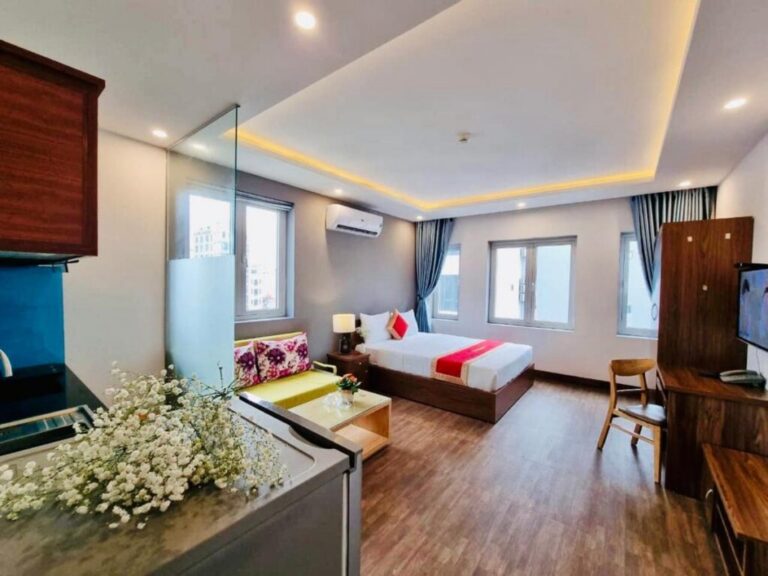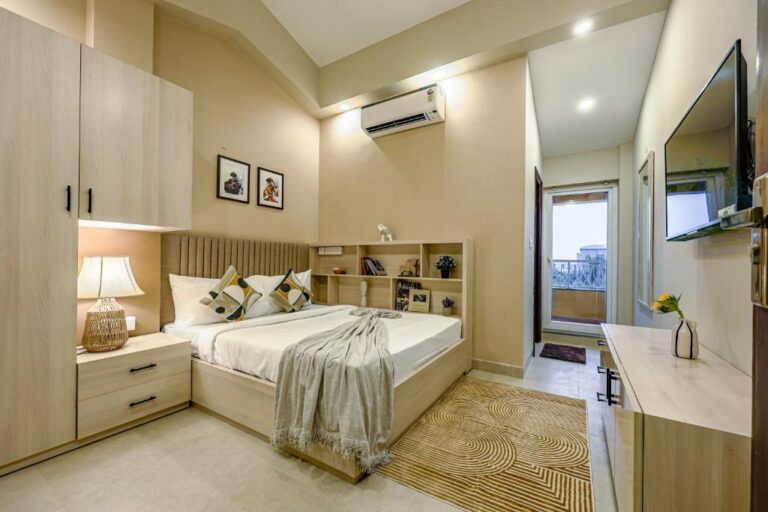
Best Apartment Hotel for Business Travel: An Executive Evaluation Guide
The architecture of business travel has shifted away from the brief, compressed hotel stay toward prolonged deployments and multi-city assignments. Because professional durations stretch from a standard conference to multi-week consultations, traditional hotel rooms reveal clear limitations. Standard hospitality products fail to support the cognitive and physical realities of maintaining productivity far from a permanent office. Consequently, this mismatch has elevated apartment hotels into a foundational asset class within modern corporate travel management.
Evaluating this segment requires moving past generic marketing claims of home-like comfort. Instead, travel managers must analyze how spatial design, network security, and operational flexibility intersect. An apartment hotel is not merely a larger room with a microwave. Rather, it functions as a hybrid living-working environment designed to sustain professional output over time. Furthermore, understanding how to select these properties demands an analytical framework that accounts for hidden friction, structural trade-offs, and long-term organizational efficiency.
Understanding Best Apartment Hotel for Business Travel
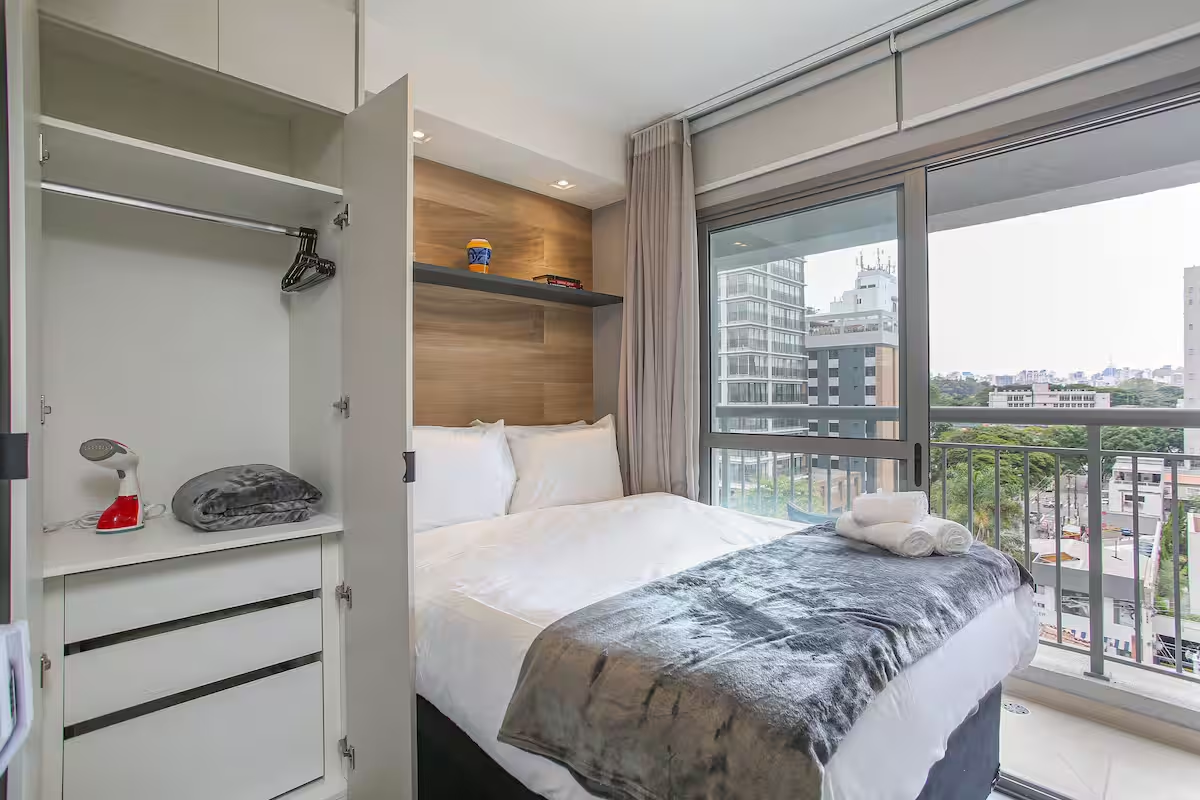
The pursuit of the best apartment hotel for business travel is frequently complicated by the ambiguity of the term itself. Throughout the commercial real estate and hospitality sectors, overlapping labels such as aparthotels and serviced suites are often used interchangeably. Despite this, these terms mask vastly different operating models. A common misunderstanding assumes that any property featuring a kitchenette qualifies as an optimal corporate environment. However, this oversimplification ignores critical structural variables, including network infrastructure reliability and commercial lease flexibility.
A true high-performing property balances independent residential living with institutional service guarantees. Specifically, it eliminates the friction of setting up utilities while avoiding the sterile isolation of traditional hotels. Evaluating these environments therefore requires assessing how effectively the physical layout separates active work functions from rest zones. Ultimately, this ensures that a multi-week deployment does not degrade employee well-being or operational focus.
The Systemic Evolution of Extended-Stay Professionalism
Historically, corporate lodging was bifurcated into two rigid choices. On one hand, companies utilized short-term business hotels for stays under a week. On the other hand, they relied on traditional residential subleases for long-term relocations. Therefore, the intermediate zone—spanning two to twelve weeks—remained poorly served. Travel managers were forced to absorb exorbitant nightly hotel bills or navigate complex real estate contracts.
Eventually, the evolution toward modern apartment hotels emerged as corporations demanded greater agility for project-based consulting. Property developers recognized that business travelers required a modular spatial setup. Specifically, they needed dedicated work surfaces, enterprise-grade data security, and self-sufficiency via functional kitchens. As a result, this shift redefined the extended-stay asset from a budget compromise into a primary engine of professional mobility.
Conceptual Frameworks for Asset Evaluation
To systematically assess properties, travel buyers and independent professionals should utilize targeted analytical frameworks.
1. The Spatial-Cognitive Zoning Model
This framework evaluates the interior floor plan based on psychological separation. Properties where the bed and desk occupy a single line of sight often lead to cognitive fatigue. Therefore, top-tier assets enforce physical zoning to separate work desks from sleep areas.
2. The Frictional-Invoicing Index
This model measures the administrative burden of a property. While independent short-term rentals offer space, their fragmented billing creates massive backend overhead. Conversely, true corporate apartment hotels provide unified master billing and standardized corporate invoicing.
3. The Operational Resiliency Spectrum
This concept analyzes how a property handles operational anomalies like broadband outages or maintenance requests. Unmanaged residential rentals often leave occupants stranded. In contrast, institutional apartment hotels provide immediate digital desk support with rapid resolution guarantees.
Classifying the Apartment Hotel Landscape
The market comprises several distinct operational models, each with specific structural trade-offs.
| Category | Infrastructure Strength | Primary Professional Application |
| Institutional Aparthotels | Unified front desk, consolidated billing, robust Wi-Fi | General corporate deployments and project teams |
| Boutique Serviced Suites | High design integrity, localized neighborhood integration | Executive leadership stays and client-facing visits |
| Extended-Stay Flagship Brands | Reliable standardization, predictable loyalty structures | High-volume corporate travel programs |
| Managed Corporate Housing Networks | Residential-scale square footage, full kitchens | Multi-month relocations and complex assignments |
Realistic Decision Logic
The selection process must be dictated by assignment duration and collaboration intensity. For instance, a solo technical consultant deployed for three weeks requires high-security connectivity. Consequently, an Institutional Aparthotel minimizes friction. Conversely, a leadership team executing a regional expansion benefits more from a Managed Corporate Housing Network.
Scenario-Based Decision Logic
-
The Mid-Length Project Deployment: A team of four engineers is deployed to an industrial hub for forty-five days. Failure Point: Booking standard hotel rooms results in unsustainable dining expenses. Decision Pivot: Securing multi-bedroom suites with full kitchens reduces per-diem costs and enhances team workflow.
-
The Executive Client Pitch: A senior director needs a base for a week of high-stakes client meetings. Failure Point: Selecting an economy extended-stay property located far from the financial core. Decision Pivot: Prioritizing central, boutique serviced apartments preserves executive energy and professional positioning.
Resource Dynamics and Indirect Costs
Analyzing the financial footprint of extended lodging requires looking beyond the nightly rate. Specifically, the economic advantage of apartment hotels often manifests in indirect savings.
-
Direct Costs: Nightly room tariffs, local occupancy taxes, and mandatory cleaning fees.
-
Indirect Subsistence Costs: Traditional hotels force 100% reliance on external dining. Conversely, apartment hotels with functional kitchens reduce cumulative meal expenditures significantly.
-
Productivity Impact: Access to in-unit laundry and nutritional independence directly lowers traveler burnout, thereby reducing the hidden cost of diminished work output.
| Cost Dimension | Traditional Hotel Room | Apartment Hotel Suite |
| Food & Beverage Overhead | High (Exclusively outsourced dining) | Low (In-unit food preparation capability) |
| Laundry & Maintenance | High (Per-item outsourced laundry tariffs) | Low (In-unit or complimentary facility access) |
| Workspace Ergonomics | Variable (Often lap-desks or small accent tables) | High (Dedicated multi-zone desks and seating) |
Tools, Strategies, and Support Systems
Optimizing the deployment of apartment hotel assets requires specific management instruments.
-
Corporate Housing Aggregators: Utilize platforms that vet properties specifically for business compliance and internet verification.
-
Master Service Agreements (MSAs): For recurring travel, establish direct MSAs with operators to lock in preferential rate tiers.
-
Digital Travel Portals: Implement centralized booking tools that allow travelers to filter explicitly for workspace ergonomics.
-
Property Audit Checklists: Maintain internal review logs detailing specific building Wi-Fi speeds and noise profiles.
The Risk Landscape and Systemic Failure Modes
Extended-stay deployments carry unique operational vulnerabilities that require proactive mitigation.
-
The Pseudo-Residential Trap: Some properties market themselves as apartment hotels but lack professional management, leading to inconsistent housekeeping standards.
-
Bandwidth Contention: Residential-grade routers scaled across high-density blocks frequently suffer from severe evening latency. Therefore, enterprise verification of dedicated bandwidth is mandatory.
-
Rigid Cancellation Penalties: Long-stay operators sometimes enforce strict notice clauses for early project termination, exposing the firm to financial liability.
Governance and Long-Term Adaptation
Managing a corporate lodging portfolio requires continuous oversight to ensure alignment with organizational needs.
-
Quarterly Spend Reviews: Audit utilization data across preferred partners to evaluate whether contracted rate structures yield optimal returns.
-
Supplier Diversification: Avoid over-reliance on a single extended-stay brand to hedge against regional inventory crunches.
-
The Layered Operational Checklist:
-
Infrastructure Audit: Verify network security protocols prior to booking.
-
Contract Flexibility: Ensure terms permit agile extension without punitive penalties.
-
Support Validation: Confirm the presence of responsive administrative assistance.
-
Measurement, Tracking, and Evaluation
-
Leading Indicators: Traveler pre-trip satisfaction scores regarding workspace setup and onboarding friction.
-
Lagging Indicators: Total program cost per project day and incidence of mid-stay relocation requests.
-
Documentation Standards: Maintain a centralized corporate repository logging property performance data and internet reliability ratings.
Common Misconceptions and Strategic Corrections
-
Apartment hotels are only cost-effective for stays exceeding thirty days. In reality, modern dynamic pricing makes them highly competitive even for short durations when factoring in incidental savings.
-
All in-room kitchens are fully functional. Many properties feature minimalist kitchenettes lacking adequate cookware or ventilation.
-
Residential short-term rentals are a viable substitute for corporate aparthotels. Unregulated rentals introduce severe compliance risks and unpredictable safety standards.
-
Daily housekeeping is a marker of higher quality. For extended-stay professionals, intrusive daily cleaning can disrupt focus; periodic scheduling is often preferred.
Conclusion
The selection of the optimal extended-stay environment is a critical determinant of professional productivity and financial efficiency. By treating lodging infrastructure as an operational tool, organizations can insulate their teams from travel friction. Ultimately, apartment hotels bridge the gap between domestic stability and corporate utility, establishing a resilient foundation for long-term professional success.