Top Staycation Experiences in America: Master Frameworks for Regional Leisure
The contemporary structural evolution of American leisure and work-life boundaries reflects a profound transformation in how individuals consume localized space, psychological recovery, and domestic recreation. For generations, traditional vacation paradigms maintained an unyielding geographic imperative: true rest required physical dislocation, long-distance transit, and total detachment from familiar home environments. As corporate work schedules compress, remote professional integration intensifies, and international travel logistics grow increasingly complex, this long-haul travel model has encountered severe friction. Standard tourism, burdened by airport congestion, time zone adjustments, and compressed itinerary pacing, frequently induces acute cognitive fatigue rather than authentic restoration. Consequently, a growing segment of the population has rejected distant holiday-making in favor of intentional local immersion.
This operational and psychological shift has cemented localized leisure as a primary pillar of contemporary lifestyle management. Evaluating the structural and experiential landscape requires moving past promotional marketing to inspect how urban zoning, regional ecology, hospitality design, and digital disconnection intersect. Identifying the top staycation experiences in america demands an analytical framework capable of distinguishing genuine restorative environments from clever lifestyle branding. Whether an urban professional seeks cognitive recovery within architectural sanctuaries, a family designs a multi-day regional retreat, or an institutional analyst evaluates domestic tourism performance, understanding the systemic mechanics of regional leisure is indispensable.
Navigating this domain requires a comprehensive reference manual that strips away superficial distinctions to evaluate economic drivers, psychological vulnerabilities, and spatial strategies. The following analysis provides an exhaustive breakdown of the sector, exploring structural classifications, real-world deployment scenarios, cost dynamics, and long-term asset governance without resorting to simplistic generalities.
Understanding “Top Staycation Experiences in America”
Semantic Ambiguity and Regional Fragmentation
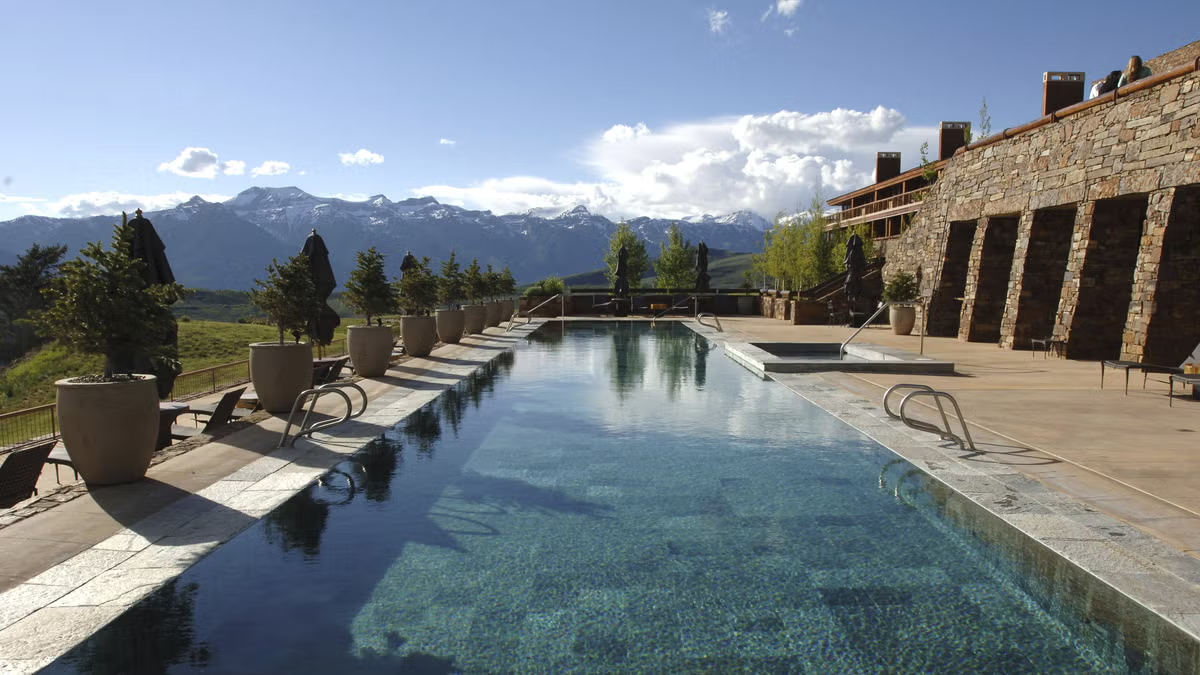
Constructing an accurate evaluation of top staycation experiences in america requires navigating profound semantic ambiguity and regional fragmentation across domestic leisure markets. Analysts frequently conflate standard weekend staycations, luxury urban hotel overnights, wilderness cabin retreats, and wellness programming under a single banner, obscuring massive variances in psychological restorative value. A common misunderstanding assumes that market leadership correlates directly with massive amenity footprints or high price points, ignoring critical micro-level variables. These variables include acoustic isolation from urban noise pollution, digital boundary enforcement, and seamless micro-transit accessibility.
Environmental Design Over Surface Luxury
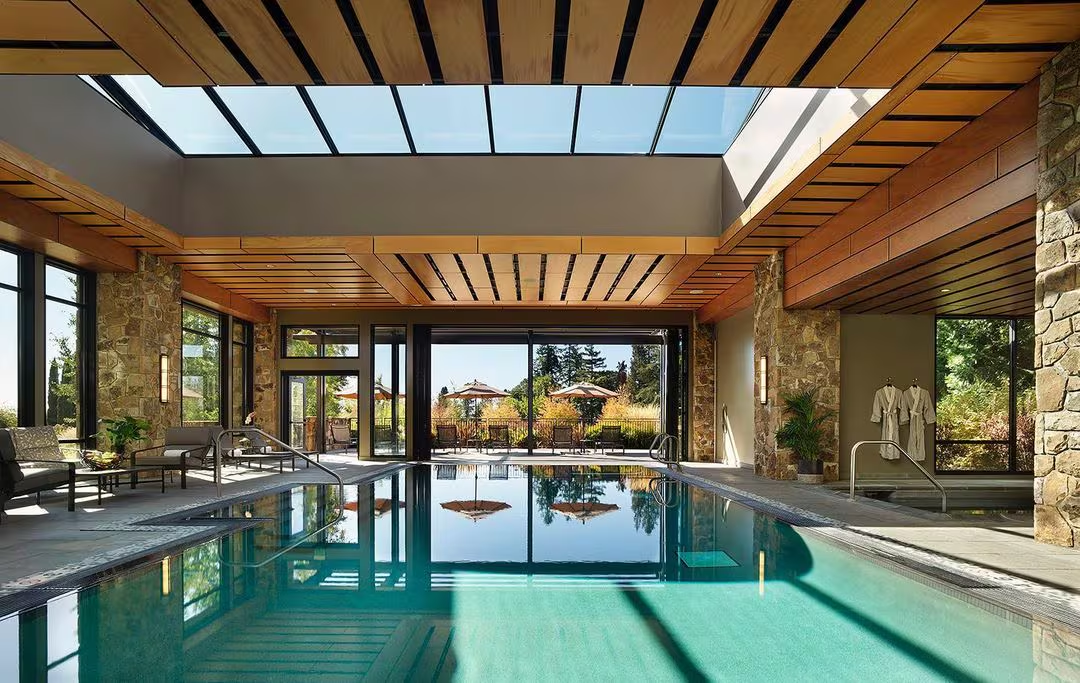
True professional assessment demands analyzing how physical architecture and localized environmental design intersect to support deep psychological detachment. Experiences that excel in domestic markets achieve dominance through sensory curation, architectural harmony, and deliberate friction reduction rather than cosmetic interior styling. Consequently, evaluating top-tier options means looking past promotional photography to assess structural tranquility, environmental integration, and spatial ergonomics. Misjudging these factors leads to high cognitive friction and diminished recovery for individuals attempting to disengage from professional routines.
Deep Contextual Background
Historically, American leisure culture was heavily anchored in the agrarian and industrial ethos of annual, distant migration. The post-World War II expansion of the interstate highway system and commercial aviation solidified the cultural norm that relaxation required physical relocation to distant coastal resorts, national parks, or foreign destinations. Localized leisure was largely dismissed as a fallback option reserved for those constrained by economic limitations or lack of vacation time.
The widespread shift toward knowledge-based economies, coupled with the blurring of physical and digital workspaces, permanently disrupted this traditional leisure hierarchy. As professionals became tethered to digital devices across global time zones, long-distance travel frequently morphed into a high-stress logistical burden rather than a restorative escape. Concurrently, boutique hospitality developers and regional architects began recognizing the untapped potential of domestic micro-environments. Over subsequent decades, this market matured into a sophisticated sector, responding dynamically to changing socioeconomic pressures and a cultural rediscovery of local geography.
Conceptual Frameworks and Mental Models
Successfully evaluating and selecting premier regional retreats requires deploying rigorous analytical frameworks during the planning and asset assessment phases.
1. The Psychological Dislocation Index
This mental model evaluates how effectively a physical environment severs an individual’s subconscious associations with routine domestic stress. Properties located merely five miles from a primary residence can achieve high psychological dislocation if architectural layout, sensory stimuli, and acoustic shielding completely eliminate environmental triggers.
2. The Sensory Compression Ratio
Unlike long-haul travel that bombards the brain with novel stimuli, sustainable regional leisure optimizes the ratio of restorative sensory input to cognitive processing load. This framework calculates acoustic, visual, and thermal comfort to prevent sensory exhaustion during short-duration escapes.
3. The Digital Boundary Friction Coefficient
Proximity to home often tempts individuals to check professional communications prematurely. This model measures the structural and spatial barriers a property erects against digital intrusion, ensuring that work-life boundaries remain intact throughout the staycation.
Key Categories and Operational Variations
The domestic landscape of regional leisure comprises several distinct structural and operational archetypes, each balancing capital allocation against target psychological outcomes.
| Retreat Category | Spatial Architecture | Primary Target Demographic | Operational Trade-off |
| Urban Architectural Sanctuaries | Historic adaptive reuse, minimalist interior design | Burned-out tech professionals, design editors | High nightly tariffs; urban ambient noise risks |
| Boutique Wellness Estates | Biophilic design, private thermal baths | Health-focused executives, couples | Strict digital detox rules; limited dining flexibility |
| Coastal Ecological Lodges | Elevated timber frames, floor-to-ceiling glass | Nature-seeking creatives, remote writers | Weather vulnerability; seasonal availability constraints |
| Historic Country Inns | Restored heritage structures, sprawling gardens | Multi-generational families, culture enthusiasts | Traditional room layouts; variable acoustic insulation |
| Desert Thermal Compounds | Rammed-earth walls, private plunge pools | Solitude seekers, wellness practitioners | Extreme ambient temperatures; remote provisioning |
| Alpine Architectural Cabins | Steep-pitch timber frames, wood-burning hearths | Skiers, winter-bound project teams | High maintenance costs; difficult winter access |
Realistic Decision Logic
Selecting an appropriate regional leisure category requires aligning personal psychological recovery requirements with local geographic realities and available time horizons. For professionals experiencing severe burnout in dense urban centers, urban architectural sanctuaries offer immediate respite without the friction of long-distance transit. Conversely, creative or strategy-driven teams often benefit more from remote ecological lodges, where profound isolation fosters deep cognitive clarity. When evaluating options across the country, travelers must weigh these trade-offs against seasonal climate fluctuations and personal decompression styles.
Detailed Real-World Scenarios
1. The Silicon Valley Executive Reset
A venture capital partner experiences severe cognitive exhaustion after months of continuous cross-country travel and board meetings. Standard weekend getaways to crowded beach resorts fail to provide psychological recovery due to persistent digital interruptions and noisy environments. The executive secures a minimalist architectural sanctuary in the nearby coastal hills featuring strict analog-only communication policies and private meditation terraces. However, selecting a property with inadequate acoustic insulation from adjacent hiking trails leads to unexpected noise disturbances. Ultimately, lost tranquility prompts the partner to demand stricter privacy guarantees for future regional retreats.
2. The Metropolitan Healthcare Professional Sabbatical
A critical care physician in Chicago seeks an intensive three-day decompression period following an exhausting multi-week hospital rotation. The physician requires complete sensory isolation and zero domestic chores. The selection lands on a boutique wellness estate featuring thermal hydrotherapy circuits and customized nutritional programming. Crucially, choosing properties with rigid scheduled dining hours conflicts with erratic sleep recovery patterns. Inflexible meal schedules compromise the relaxation process, forcing the physician to seek more adaptable boutique properties in the future.
3. The Creative Agency Leadership Retreat
A boutique design agency in Austin organizes a four-day collaborative regional retreat for its executive team to map out annual strategy. The team requires inspiring spatial architecture paired with seamless breakout areas and robust digital connectivity. The leadership secures a sprawling modernist desert compound featuring private casitas and communal outdoor dining spaces. However, committing to a remote property without reliable backup generators results in severe project disruption during an unexpected regional power outage. Financial losses and delayed deliverables consequently compromise client relations and internal morale.
4. The Multi-Generational Family Anniversary
A large family living in the Pacific Northwest coordinates a localized weekend gathering to celebrate a golden wedding anniversary without subjecting elderly relatives to arduous air travel. The family books a historic waterfront country inn offering private dining rooms and accessible garden pathways. Conversely, placing elderly relatives in historic buildings lacking modern elevators creates significant physical accessibility challenges. Compromised mobility limits participation in communal events, negatively impacting the overall celebratory experience.
Planning, Cost, and Resource Dynamics
The economic viability and selection criteria for top-tier regional escapes depend on managing complex cost distributions across direct financial outlays, time investments, and opportunity costs.
-
Direct Financial Outlays: Premium regional retreats demand higher per-night expenditures due to bespoke architectural design, personalized hospitality services, and low inventory density.
-
Time and Transit Efficiency: Unlike long-haul vacations that require extensive flight bookings and recovery days, localized getaways maximize active rest time by minimizing transit friction to under two hours.
-
Opportunity Costs: Allocating financial resources to high-end regional properties requires balancing domestic leisure budgets against broader annual travel allocations, necessitating deliberate prioritization.
| Cost Dimension | Standard Weekend Hotel | Boutique Wellness Estate | Luxury Architectural Sanctuary |
| Average Transit Duration | 15 to 45 minutes | 1 to 2 hours | 30 to 90 minutes |
| Spatial Scale | Standard hotel room (300 sq ft) | Private suite with terrace (800 sq ft) | Entire freestanding pavilion (1,500+ sq ft) |
| Service Integration | Basic front desk and housekeeping | Curated wellness and nutritional guidance | Bespoke concierge and private culinary staff |
| Ancillary Cost Exposure | High (Dining out, parking fees) | Moderate (Inclusive wellness packages) | High (Private provisioning, specialized amenities) |
Tools, Strategies, and Support Systems
Executing successful regional leisure experiences requires integrating specialized technological and operational support instruments.
-
Curated Regional Property Platforms: Specialized digital marketplaces that filter boutique inventory based on acoustic isolation, architectural merit, and digital detox capabilities rather than mass-market metrics.
-
Offline Navigation and Local Guides: Utilizing pre-downloaded regional topographic maps and curated independent culinary guides to eliminate real-time decision fatigue during the retreat.
-
Automated Digital Boundary Tools: Implementing smart device scheduling applications that automatically silence non-essential notifications and route urgent matters through designated proxy contacts.
-
Biophilic Environmental Monitors: Portable air and acoustic quality monitors that verify the baseline tranquility of a selected retreat space prior to extended occupancy.
-
Dynamic Concierge Applications: Software platforms that manage localized provisioning, private chef scheduling, and spa bookings without requiring direct human interaction.
-
Secure Transit Planning Software: Real-time regional traffic and secondary-route mapping tools designed to ensure smooth, stress-free arrival transitions.
Risk Landscape and Failure Modes
Regional retreats and staycation planning face unique operational vulnerabilities that can compromise psychological recovery and overall satisfaction if unmitigated.
-
Proximity-Induced Interference: Selecting a location too close to primary residential or professional zones increases the temptation to handle routine domestic emergencies or check work emails prematurely.
-
The Environmental Contention Trap: Misjudging local seasonal variables—such as regional pest migrations, micro-climate weather shifts, or nearby construction projects—can destroy the acoustic and visual tranquility of a retreat.
-
Service Under-Delivery: Premium boutique properties often rely on lean operational teams; sudden staff shortages can severely degrade the quality of bespoke hospitality services.
-
Acoustic Contention: Inadequate structural soundproofing in historic adaptive-reuse properties compounds quickly when neighboring guests maintain misaligned daily schedules.
-
Hyper-Familiarity Fatigue: Selecting a location within an overly familiar regional corridor can prevent the psychological transition necessary for genuine cognitive detachment.
Governance, Maintenance, and Long-Term Adaptation
Maintaining asset quality and operational excellence across premier regional retreat properties requires continuous administrative oversight and structured maintenance protocols.
-
Quarterly Environmental Audits: Systematic reviews of indoor air quality, acoustic dampening performance, and biophilic landscaping health to ensure optimal restorative conditions.
-
Regulatory Compliance Reviews: Monitoring shifting municipal short-term zoning regulations and environmental protection statutes to ensure properties remain fully compliant with regional laws.
-
The Layered Operational Checklist:
-
Acoustic Isolation: Verify that exterior sound barriers and interior insulation meet rigorous tranquility benchmarks.
-
Digital Hygiene: Test local cellular signal blocking or secure Wi-Fi partitioning capabilities.
-
Provisioning Integrity: Audit local culinary partnerships and emergency medical supply readiness.
-
Structural Resilience: Inspect biophilic elements, water filtration systems, and architectural fixtures for wear.
-
Measurement, Tracking, and Evaluation
-
Leading Indicators: Pre-retreat scheduling completion rates, digital device lock-box compliance, and initial arrival transit stress levels.
-
Lagging Indicators: Post-retreat cognitive recovery ratings, sustained productivity improvements, sleep quality metrics during the stay, and subjective psychological restoration scores.
-
Documentation Standards: Maintaining a personal or professional digital ledger that tracks historical retreat locations, effectiveness ratings, and environmental variables for future planning.
-
Benchmarking Analysis: Regularly comparing regional getaway outcomes against traditional long-haul travel experiences to evaluate long-term time and financial efficiency.
Common Misconceptions and Oversimplifications
-
“A staycation is simply staying at home without going to work.” This misconception ignores the critical necessity of spatial displacement; remaining in one’s primary residence maintains subconscious domestic stress triggers.
-
“Regional retreats are less valuable than international travel.” Psychological research demonstrates that restorative outcomes depend on cognitive detachment rather than geographic distance.
-
“Luxury hotels always provide superior relaxation compared to remote cabins.” High-amenity urban hotels frequently introduce sensory overload, whereas remote cabins prioritize cognitive silence.
-
“Planning a local getaway requires minimal preparation.” Securing genuinely restorative regional environments requires rigorous vetting of acoustic, spatial, and environmental variables.
-
“Proximity to home eliminates all travel-related anxiety.” Unfamiliar regional roads, local traffic congestion, and remote property logistics can introduce unexpected friction if unmanaged.
-
“Technology-free retreats are universally desirable.” Total disconnection causes acute anxiety for certain professionals; structured, gradual digital decoupling yields higher sustained satisfaction.
Ethical, Practical, and Contextual Considerations
Operating or utilizing regional leisure assets within American landscapes carries profound community and environmental responsibilities. Travelers and developers must balance personal recreation with ecological preservation, ensuring that high-end retreat properties do not strain local natural resources or disrupt fragile regional ecosystems. Additionally, sustainable design practices—such as low-impact architecture, water conservation, and support for local independent economies—are essential for maintaining the integrity of host communities. Preserving harmonious relationships with rural neighbors protects both the immediate environment and the long-term viability of domestic tourism corridors.
Conclusion
The evolution of regional leisure across the United States reflects a fundamental, permanent shift in how modern professionals seek restoration and psychological recovery. By synthesizing architectural refinement with localized exploration, premier domestic retreats offer a compelling blueprint for sustainable personal well-being. Success in this domain requires moving past superficial travel tropes to master the complex interplay of environmental design, cognitive psychology, and intentional time management. Through careful planning, operational mindfulness, and an unwavering focus on psychological renewal, individuals can establish enduring habits of rest that thrive across demanding professional cycles.