Apartment Hotel Overview: Master Frameworks for Hybrid Hospitality Asset Management
The modern geography of professional mobility, project-based deployment, and urban relocation has fundamentally altered the relationship between shelter and time. For decades, the built environment maintained a sharp division between temporary accommodations designed for days and residential leases structured around years. As corporate assignments stretch from a brief conference to multi-month consultations, and as digital workflows decouple labor from fixed geography, this binary framework has fractured. Traditional hotel rooms, optimized for rapid transient turnover and minimal in-room infrastructure, fail to support the cognitive and domestic demands of long-duration travelers.
Simultaneously, unmanaged residential properties impose administrative and legal frictions that make them impractical for fluid professional lifestyles. This structural gap has elevated the aparthotel or serviced apartment asset class into a central pillar of global real estate and hospitality strategy. Evaluating this hybrid model requires moving far beyond superficial amenity lists to examine how physical design, regulatory classification, mechanical engineering, and digital systems intersect. A comprehensive examination of this sector reveals an asset class defined by operational complexity, shifting consumer expectations, and a profound redefinition of urban real estate utility.
Navigating this domain demands an analytical framework that strips away marketing terminology to inspect the underlying mechanics of hybrid properties. Whether an institutional investor is assessing development yields, a corporate travel manager is structuring enterprise-wide lodging programs, or an architect is designing vertical infrastructure, understanding the systemic realities of these properties is paramount. This analysis serves as an exhaustive reference manual, laying bare the economic drivers, operational vulnerabilities, and spatial strategies that govern the contemporary extended-stay market.
Understanding Apartment Hotel Overview
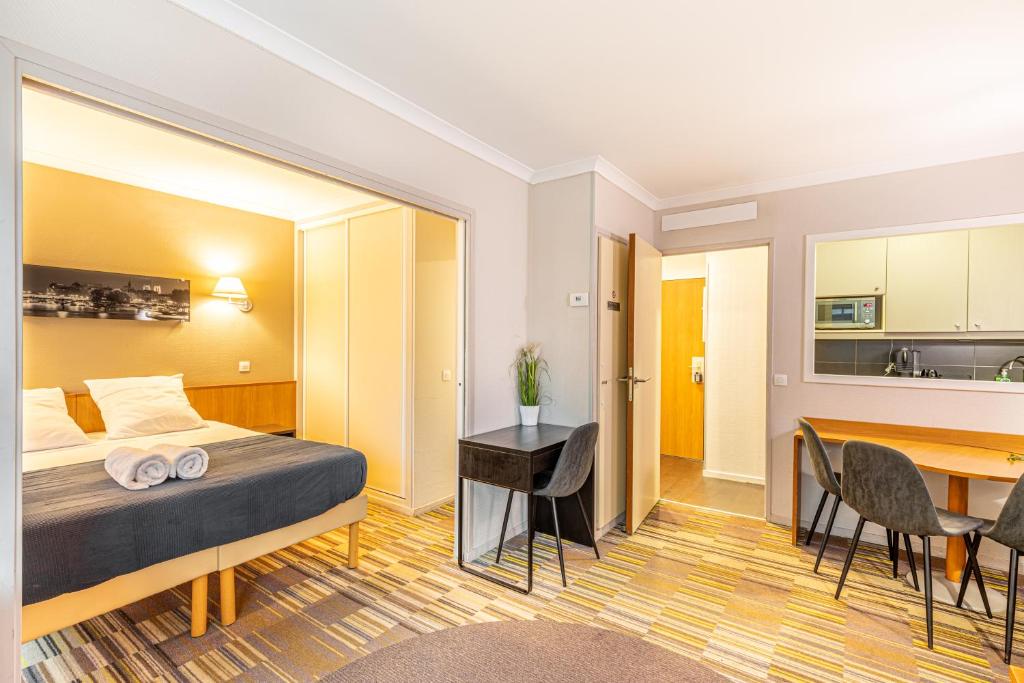
Constructing an accurate apartment hotel overview requires navigating profound semantic ambiguity across the global real estate and hospitality sectors. Industry participants frequently interchange terms like serviced apartments, aparthotels, extended-stay suites, and corporate housing, yet these labels often conceal vastly different legal structures, service levels, and target demographics. A common misunderstanding assumes that adding a microwave and a compact refrigerator to a standard hotel room creates a functional hybrid asset. This oversimplification ignores vital structural variables, including fire-door compliance, commercial kitchen ventilation, vertical plumbing capacity, and multi-month operational flexibility.
True professional evaluation demands analyzing how spatial architecture influences human psychology over extended durations. While a standard hotel room prioritizes sleep efficiency and rapid guest turnover, a hybrid asset must mitigate cognitive fatigue, provide nutritional self-sufficiency, and accommodate secure digital infrastructure. Therefore, utilizing any initial apartment hotel overview effectively means looking past promotional imagery to assess the underlying operational integrity of the property. Misjudging these factors often results in high operational friction, rapid asset degradation, and diminished traveler productivity during multi-week deployments.
Deep Contextual Background
Historically, urban real estate development maintained a strict binary division between residential apartments and commercial hotels. Residential buildings were constructed to satisfy long-term leasing laws, featuring individualized utility metering, permanent tenant protections, and structural layouts optimized for domestic life. In contrast, commercial hotels were designed for maximum nightly room turnover, intentionally stripping away full kitchens and in-room laundry facilities to protect captive food-and-beverage revenues and minimize structural plumbing complexity.
The rapid rise of global project-based consulting, cross-border corporate deployments, and digital nomadism shattered this traditional dichotomy. Occupants requiring stays between fourteen days and six months found themselves poorly served by either model. Traditional apartments demanded rigid twelve-month leases and cumbersome utility setups, while standard hotels induced severe financial fatigue and lifestyle friction over extended periods. Real estate developers gradually recognized the viability of the hybrid asset class, leading to the evolution of purpose-built aparthotels that merge residential square footage with hotel-grade operational back-of-house systems.
Conceptual Frameworks and Mental Models
Successful execution and evaluation of hybrid real estate assets require deploying rigorous analytical frameworks during the initial programming and assessment phases.
1. The Spatial-Cognitive Zoning Model
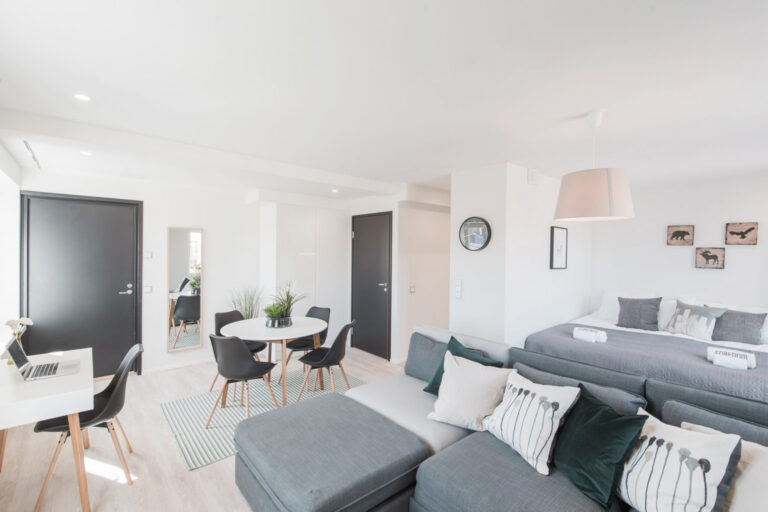
This mental model evaluates floor plate designs based on psychological separation. Units where the bed, work desk, and cooking area occupy an unbroken line of sight routinely cause severe cognitive fatigue for long-stay occupants. Top-tier planning mandates strict micro-zoning, ensuring that work surfaces are visually and acoustically isolated from domestic rest spaces.
2. The Mechanical Resiliency Index
Unlike standard hotels where guests use utilities intermittently, extended-stay occupants operate dishwashers, laundry units, and multi-zone HVAC systems concurrently and frequently. This framework calculates cumulative peak load demands on vertical plumbing stacks, electrical panels, and ventilation shafts to prevent systemic building failures.
3. The Lifecycle Durability-Aesthetic Equilibrium
Hybrid properties experience accelerated wear patterns compared to standard hospitality assets due to extended cooking and living habits. This model dictates that interior finishes and millwork must balance domestic warmth with heavy-duty commercial durability to prevent premature renovation cycles.
Key Categories and Operational Variations
The hybrid lodging market comprises several distinct development archetypes, each balancing capital allocation against target user demographics.
| Category | Structural Strength | Primary Target Demographic | Development Trade-off |
| Urban Micro-Aparthotel | High spatial efficiency, integrated smart-tech | Solo digital nomads, short project consultants | Limited communal footprint; high turnover |
| Extended-Stay Corporate Flagship | Standardized corporate amenities, robust loyalty | Enterprise assignees, consulting teams | Rigid corporate branding; lower local character |
| Boutique Serviced Loft | High design integrity, neighborhood integration | Creative professionals, executive leadership | Higher per-unit build cost; complex servicing |
| Co-Living Hybrid Suite | Shared social kitchens, modular private quarters | Young professionals, community-focused workers | Acoustic spillover risks; intensive management |
| Resort Aparthotel | Multi-room square footage, leisure amenities | Multi-generational families, leisure travelers | Seasonal demand volatility; high maintenance overhead |
| Adaptive Reuse Suite | Unique historic architecture, central locations | Cultural tourists, long-term urban explorers | Rigid structural constraints; complex retrofitting |
Realistic Decision Logic
Selecting an appropriate asset archetype requires aligning initial capital expenditure with local zoning realities and target demand velocity. For dense downtown cores with prohibitive land costs, an urban micro-aparthotel maximizes revenue per square foot. Conversely, suburban innovation corridors benefit more from extended-stay corporate flagship models, where predictable corporate contract blocks offset lower local foot traffic. When formulating a reliable apartment hotel overview for an investment portfolio, asset managers must weigh these trade-offs against regional market maturity.
Detailed Real-World Scenarios
-
The Industrial Tech Deployment: A development team plans a 100-unit aparthotel near a major manufacturing hub. Constraint: Budget restrictions threaten to eliminate in-unit washer-dryer installations in favor of a communal basement laundry room. Decision Point: The planner overrides the cost-cutting measure, insisting on in-unit laundry stacks. Failure Mode: Omitting in-unit laundry causes extreme occupant friction and negative review trends among multi-week engineering consultants. Second-Order Effect:
-
The Historic Office Conversion: An investor acquires a vacant 1920s office building for conversion into boutique serviced apartments. Constraint: Strict historic preservation rules prohibit exterior core drilling for new vertical plumbing vents. Decision Point: Planners utilize advanced vacuum-drainage plumbing systems that route waste horizontally through existing ceiling plenums. Failure Mode: Inadequate acoustic decoupling of the vacuum plumbing system. Second-Order Effect: Severe noise transmission between floors, requiring costly post-occupancy acoustic remediation.
-
The Regional Medical Hub Extension: A healthcare conglomerate establishes a rotating physician fellowship program requiring three-month accommodations near a major hospital complex. Constraint: Strict institutional compliance rules require secure, encrypted wired internet connections alongside wireless networks. Decision Point: The property deploys enterprise-grade VLAN segmentation for every guest suite. Failure Mode: Relying on consumer-grade routers that drop secure VPN tunnels under high evening bandwidth loads. Second-Order Effect: Visiting clinicians experience workflow interruptions, prompting the hospital network to terminate its preferred lodging agreement.
-
The Urban Coastal Expansion: A national operator launches a hybrid property in a high-density coastal tourism market characterized by extreme seasonal shifts. Constraint: Managing cash flow stability during off-peak winter months without compromising long-term rate integrity. Decision Point: Introducing dynamic, tiered discount structures for stays exceeding thirty days during shoulder seasons. Failure Mode: Over-indexing on low-rate short-term leisure tourists who cause accelerated wear without contributing to auxiliary revenue streams. Second-Order Effect: Brand dilution and increased friction between transient vacationers and extended-stay corporate guests.
Planning, Cost, and Resource Dynamics
The economic viability of hybrid hospitality projects depends on managing complex capital outlays and operational cost distributions over the asset lifecycle.
-
Direct Capital Expenditures: Higher upfront costs for commercial-grade in-unit appliances, heavy-duty acoustic insulation, and multi-zone HVAC infrastructure compared to standard multi-family builds.
-
Operational Expense Variances: Housekeeping cost structures differ significantly; turnover cleanings occur less frequently than in standard hotels, but deep-cleaning cycles require specialized labor due to heavy kitchen grease and extended wear.
-
Opportunity Costs: Allocating square footage to shared co-working lounges or wellness facilities reduces immediate rentable room count but drives higher nightly tariffs and extends average length of stay.
| Cost Dimension | Standard Multi-Family Asset | Hybrid Aparthotel Asset | Traditional Hotel Asset |
| In-Unit Fixture CapEx | Low to Moderate (Standard residential) | High (Commercial-grade appliances, millwork) | Low (Beds, baths, minimal millwork) |
| Average Length of Stay | 365+ days (Residential lease) | 14 to 45+ days (Hybrid tariff) | 2 to 4 days (Transient nightly rate) |
| Back-of-House Infrastructure | Minimal (Basic leasing office) | Extensive (Linen staging, tech desk, storage) | Massive (Commercial laundry, large F&B kitchens) |
| Turnover Labor Intensity | Annual or bi-annual deep clean | Bi-weekly servicing, deep clean on departure | Daily servicing, rapid turnover cleaning |
Tools, Strategies, and Support Systems
Executing successful hybrid developments requires integrating specialized technological and operational support instruments from the design phase onward.
-
Property Management Systems (PMS) with Long-Stay Modules: Standard hotel PMS platforms struggle with extended billing cycles, multi-week utility tracking, and staged housekeeping schedules. Planners must specify systems built for hybrid lease-hospitality structures.
-
Enterprise-Grade Bandwidth Management: Unlike residential routers or basic hotel Wi-Fi, hybrid properties require secure, partitioned VLAN architecture to support remote corporate employees handling sensitive intellectual property.
-
Digital Access Control and Mobile Key Integration: Designing seamless digital entry systems reduces front desk labor overhead while streamlining secure guest onboarding for off-hours arrivals.
-
Preventative Maintenance Scheduling Software: Integrating automated asset tracking tools that monitor appliance lifecycles (dishwashers, HVAC filters, laundry units) to prevent mid-stay mechanical failures.
-
Dynamic Revenue Management Engines: Utilizing algorithms calibrated for extended-stay length-of-stay pricing curves rather than standard daily fluctuations.
-
Automated Environmental Controls: Smart thermostats that adjust temperature and humidity settings when units are unoccupied, curbing utility waste across long operational cycles.
Risk Landscape and Failure Modes
Hybrid properties face unique operational vulnerabilities that can compromise profitability if not actively mitigated during planning.
-
Regulatory Classification Conflicts: Many municipalities maintain strict zoning definitions dividing residential and transient lodging. Misclassifying an aparthotel can trigger severe code violations or residential tenant protection liabilities.
-
The Amenity Undersizing Trap: Developers often miscalculate the square footage required for back-of-house storage, linen management, and waste disposal for extended-stay guests, leading to cluttered corridors and operational bottlenecks.
-
Revenue Management Volatility: Blending long-term contracted corporate blocks with short-term transient bookings requires sophisticated dynamic pricing algorithms to prevent cannibalizing high-yield periods.
-
Acoustic Contention: Inadequate soundproofing between units compounds quickly when occupants maintain misaligned daily schedules, leading to chronic guest dissatisfaction.
-
Appliance Lifecycle Fatigue: Underestimating the intensity of commercial-grade use in residential-style kitchens leads to premature failure of dishwashers and ranges, disrupting long-stay operations.
Governance, Maintenance, and Long-Term Adaptation
Long-term asset preservation in the hybrid hospitality sector requires continuous administrative oversight and rigorous maintenance protocols.
-
Quarterly Asset Audits: Conducting systematic reviews of high-wear interior elements—such as cabinetry hinges, upholstery fabrics, and appliance motors—to execute preventative repairs before failure occurs.
-
Zoning and Code Compliance Reviews: Monitoring shifting municipal short-term rental regulations to ensure the property remains fully compliant with evolving local housing and commercial laws.
-
The Layered Operational Checklist:
-
Mechanical Resilience: Verify HVAC and plumbing load capacities under peak multi-unit cooking scenarios.
-
Digital Security: Audit enterprise network segmentation and access control encryption logs monthly.
-
Service Quality Tracking: Review long-stay occupant feedback loops to identify emerging ergonomic or functional friction points.
-
Energy Efficiency Audits: Evaluate consumption patterns of smart infrastructure to optimize utility costs.
-
Measurement, Tracking, and Evaluation
-
Leading Indicators: Pre-arrival digital onboarding completion rates, initial Wi-Fi speed test logs, and early maintenance ticket response velocity.
-
Lagging Indicators: Net Operating Income (NOI) per available room, average length of stay retention curves, and repeat corporate booking percentages.
-
Documentation Standards: Maintaining a comprehensive digital facility ledger that tracks historical maintenance costs, guest satisfaction trends by room type, and lifecycle depreciation of heavy-use amenities.
-
Operational Benchmark Reports: Regularly comparing performance metrics against broader hospitality and multi-family residential indexes to gauge competitive positioning.
Common Misconceptions and Oversimplifications
-
“Aparthotels are simply residential apartment buildings with a front desk.” This ignores the critical hospitality infrastructure, dynamic pricing capabilities, and commercial licensing required to operate successfully at scale.
-
“Extended-stay guests require fewer staff interactions.” While daily housekeeping is often reduced, extended-stay guests require higher-touch community management, local orientation support, and responsive technical assistance.
-
“Standard residential appliances work fine in hybrid hotels.” Residential-grade refrigerators and dishwashers fail rapidly under the heavy utilization patterns typical of transient corporate guests.
-
“Kitchens eliminate the need for any food-and-beverage revenue.” Innovative operators successfully capture auxiliary revenue through curated local pantry provisioning, automated micro-markets, and integrated neighborhood dining partnerships.
-
“Extended-stay assets are recession-proof.” While corporate contracts offer stability, economic downturns can compress consulting budgets and curtail corporate project deployments.
-
“Technology completely replaces human concierge services.” Digital automation streamlines logistics, but high-value corporate clients still rely on knowledgeable human staff for complex problem-solving.
Ethical, Practical, and Contextual Considerations
Developing hybrid lodging assets carries broader community and urban planning responsibilities. Operators must balance commercial yield optimization with neighborhood integration, ensuring that high-turnover transient guests do not disrupt the social fabric of existing residential communities. Additionally, sustainable design practices—such as energy-efficient HVAC zoning, water-conserving laundry systems, and durable, locally sourced materials—are essential for minimizing the environmental footprint of high-density urban developments over their operational lifecycle.
Conclusion
The evolution of hybrid hospitality reflects a fundamental shift in how people live, work, and travel in the modern economy. By synthesizing domestic functionality with institutional operational rigor, aparthotels offer a compelling blueprint for the future of real estate development and professional mobility. Success in this sector requires moving past superficial design trends to master the complex interplay of spatial zoning, digital infrastructure, and long-term asset management.