Compare Apartment Hotels: The Definitive Extended-Stay Guide
The modern landscape of commercial real estate and transitional mobility has rendered obsolete the simplistic dichotomy between permanent residential leasing and transient hotel stays. As professional assignments lengthen, project-based deployments expand, and remote knowledge work decouples individuals from traditional office constraints, the market has gravitated toward hybrid lodging models. Among these, apartment hotels—frequently designated as aparthotels or serviced apartments—occupy a critical position. They synthesize the domestic independence of multi-family residential architecture with the operational efficiency and centralized service structures of commercial hospitality.
Navigating this hybrid asset class requires a sophisticated analytical approach. To evaluate and compare apartment hotels effectively, decision-makers, corporate travel managers, and real estate developers must move past surface-level amenity lists and marketing narratives. The process demands rigorous scrutiny of spatial design, mechanical system redundancy, economic amortization models, and operational risk factors. A failure to accurately assess these variables can lead to chronic user fatigue, elevated operational friction, and severe cost overruns over extended booking horizons.
This analysis establishes a definitive framework for examining the extended-stay sector. By dissecting the systemic evolution of these hybrid properties, exploring the behavioral mental models governing their utilization, and mapping their long-term economic and operational dynamics, this resource serves as an authoritative guide for professionals navigating the intersection of residential living and commercial hospitality.
Understanding compare apartment hotels
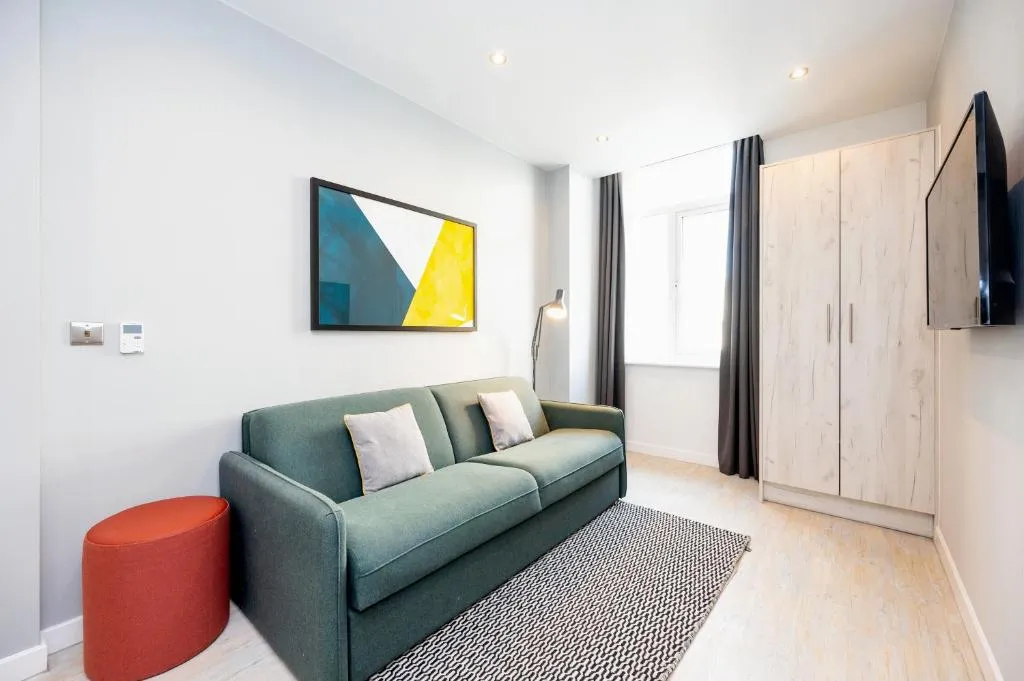
The phrase compare apartment hotels is frequently reduced to a superficial exercise in checking off amenities like Wi-Fi inclusion or kitchen counter space. In professional asset management and high-level travel procurement, however, to compare apartment hotels is to analyze how disparate physical configurations and operational back-ends perform under stress. An apartment hotel is not merely an oversized hotel room, nor is it an unregulated short-term rental; it is a carefully engineered commercial typology designed to withstand high-turnover occupancy while simulating the psychological comfort of permanent domestic space.
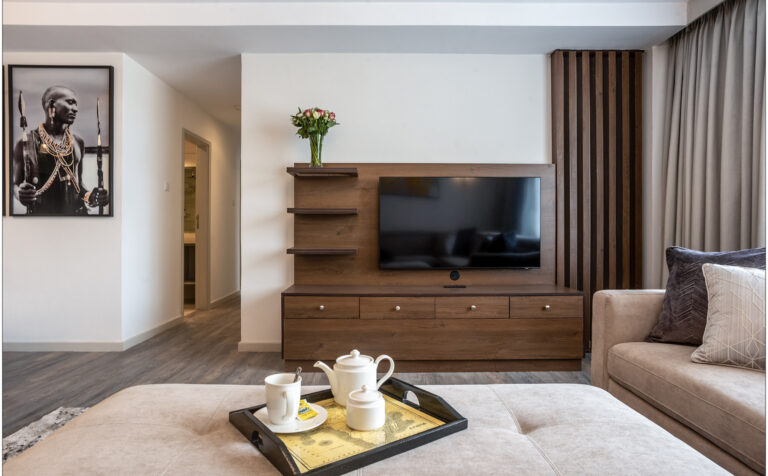
A primary risk when attempting to compare apartment hotels lies in oversimplifying the metrics of value. For instance, evaluating properties strictly on nightly rates ignores the second-order economic impacts of in-unit culinary facilities, integrated laundry infrastructure, and flexible cancellation structures. Furthermore, properties that present exceptionally well visually through curated architectural photography often fail basic operational tests, such as adequate acoustic isolation, high-bandwidth digital redundancy, or durable millwork capable of resisting continuous wear. Establishing a clear, multi-dimensional methodology to compare apartment hotels is essential for ensuring long-term utility, financial predictability, and occupant productivity.
The Systemic Evolution of Hybrid Lodging Typologies
Historically, temporary accommodation models were rigidly segregated. Traditional hotels catered to short-term guests with daily room cleaning and centralized dining, while residential apartment buildings accommodated long-term tenants via fixed annual leases. As global mobility accelerated in the late 20th century, a distinct gap emerged for travelers requiring interim housing for durations ranging from two weeks to six months.
Early market responses were utilitarian, manifesting as basic extended-stay motels with rudimentary kitchenettes. Over the past two decades, however, urbanization, project-based consulting, and digital work distribution catalyzed a structural maturation of the asset class. Architects and hospitality operators began treating the apartment hotel suite as a micro-ecosystem. The focus shifted from mere square-footage scaling to intelligent spatial programming—optimizing circulation paths, integrating functional work surfaces, and embedding commercial-grade mechanical utilities into residential layouts without sacrificing aesthetic integrity.
Conceptual Frameworks for Spatial and Operational Evaluation
Evaluating and selecting properties within this sector requires applying structured mental models that test both physical architecture and service reliability:
-
The Acoustic Isolation Gradient: A high-performance apartment hotel must protect the occupant from internal mechanical noise (such as HVAC compressors and plumbing stacks) and external urban interference. Evaluating this requires analyzing wall assembly specifications, double-glazed window ratings, and solid-core entry door construction.
-
The Ergonomic Multi-State Model: Surfaces within the unit must adapt seamlessly between operational modes. A dining table must function reliably as a secondary executive desk equipped with accessible power planes, while living zones must accommodate casual collaboration without encroaching upon private sleeping quarters.
-
The Circulation and Storage Ratio: Long-stay environments fail when storage is insufficient. The spatial plan must provide adequate linear feet of closed cabinetry, dedicated luggage staging areas, and clear pathways that prevent physical clutter from degrading the mental clarity of the occupant.
Categorizing Apartment Hotel Configurations and Trade-offs
| Category | Primary Structural Advantage | Operational Trade-off |
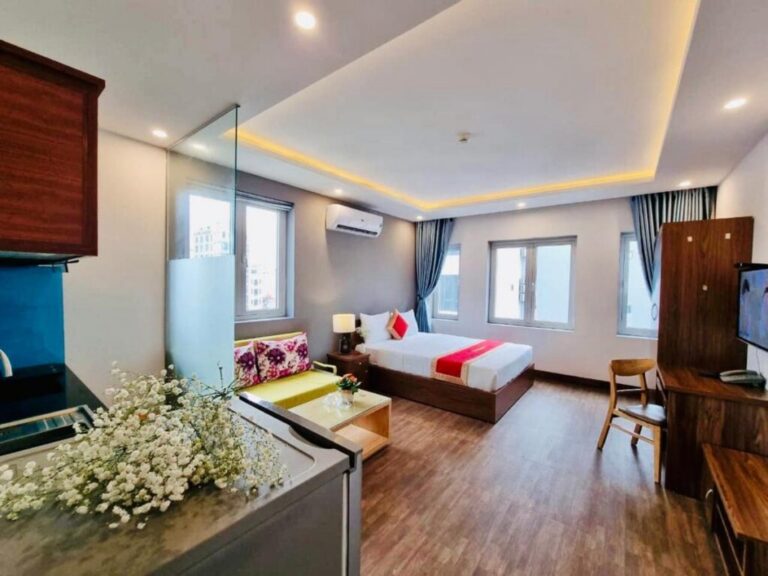
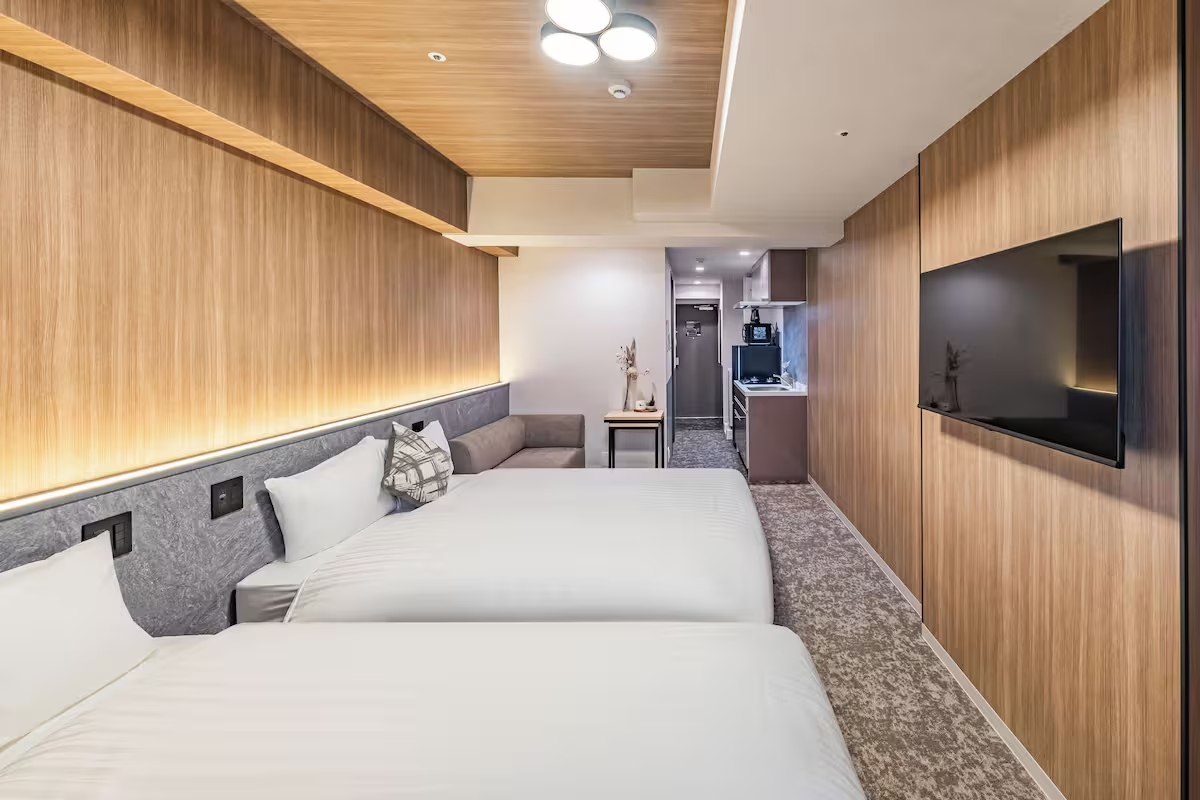
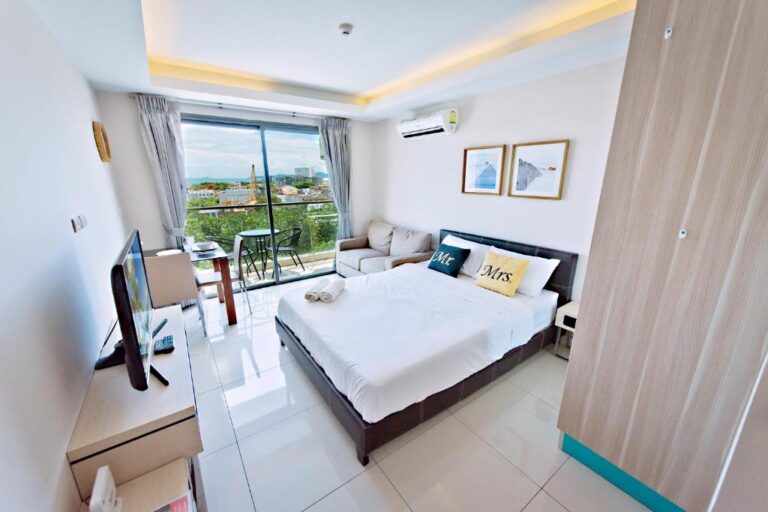
| The Optimized Micro-Studio | High spatial efficiency, lower base cost | Limited physical separation of work and rest zones |
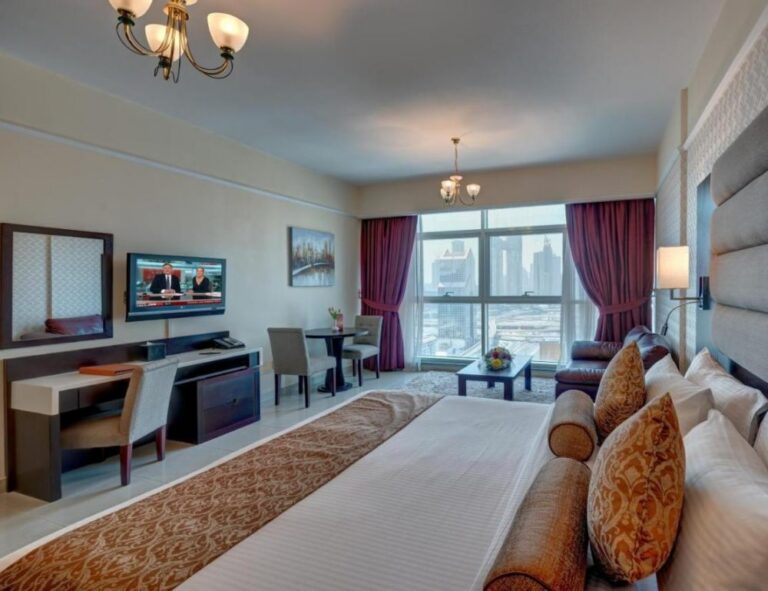
| The L-Shaped Executive Suite | Natural visual division between bed and desk | Inflexible furniture placement and fixed layouts |
| The Linear One-Bedroom | Absolute acoustic and visual privacy | Long hallway footprints reduce natural light penetration |
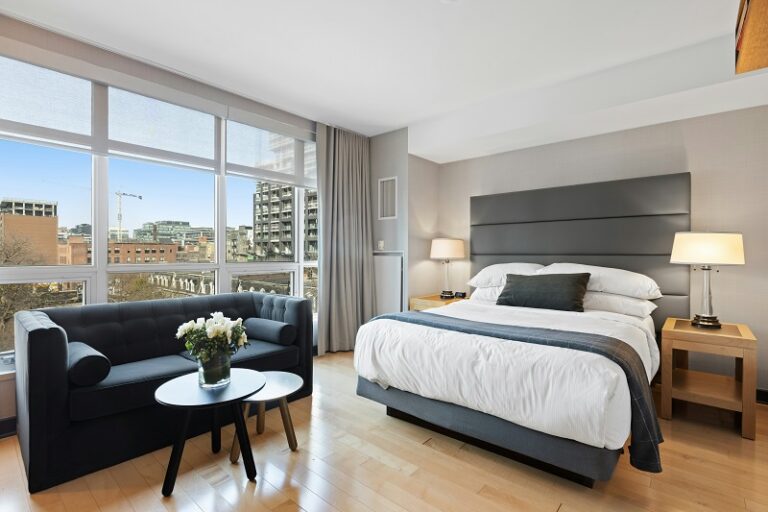
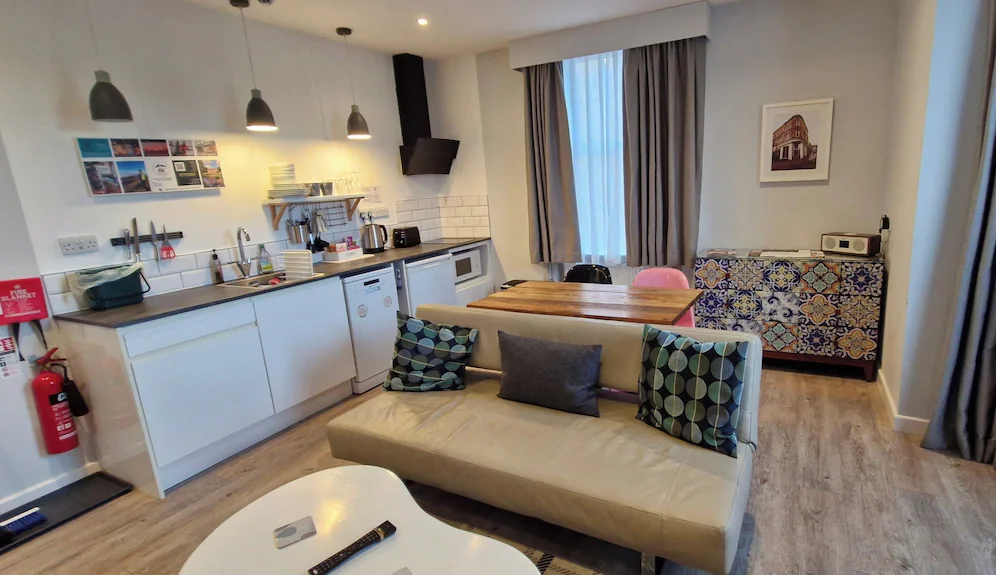
| The Open-Plan Urban Loft | Maximum volume and ambient daylight | Acoustic bleed across all functional working zones |
| The Dual-Key Modular Suite | Exceptional flexibility for project teams | High mechanical and plumbing maintenance complexity |
| The Multi-Room Extended-Stay Villa | Comprehensive domestic utility for families | High baseline operational and nightly booking cost |
When applying decision logic to these variations, the selection must be dictated by the length of stay and the intensity of work conducted within the room. For transient stays under ten days, optimized micro-studios with efficient work bars minimize wasted circulation space. For assignments extending past thirty days, the presence of a distinct sleeping chamber and full-scale kitchen infrastructure becomes mandatory to prevent psychological fatigue and maintain healthy daily routines.
Real-World Scenarios and Decision Logic
Scenario 1: The Multi-Week Technical Deployment
A software engineering team is deployed to a regional client site for a six-week systems integration project.
-
Constraint: Engineers require stable, high-bandwidth connections, dual-monitor setups, and complete privacy during continuous remote debugging sessions.
-
Failure Mode: Booking standard open-plan hotel suites where overlapping audio calls create severe workspace friction and cognitive distraction.
-
Decision Point: Prioritize apartment hotels featuring multi-room configurations with solid-core doors, independent climate zones per room, and robust hardwired or dedicated wireless network architectures.
Scenario 2: The Executive Relocation Transition
A senior executive transitions to a new corporate headquarters, requiring temporary housing for two months while permanent residential real estate is finalized.
-
Constraint: The executive must host occasional confidential virtual board meetings while managing laundry, clothing care, and independent meal preparation.
-
Failure Mode: Selecting a design-forward boutique property that lacks in-unit laundry appliances and proper ergonomic task seating, resulting in chronic physical strain.
-
Decision Point: Select properties offering linear one-bedroom apartment layouts equipped with full-sized laundry centers, adjustable task lighting, and executive work desks.
Resource Dynamics and Cost Structures
Evaluating the economics of extended-stay properties requires analyzing the interplay between direct nightly costs and hidden operational efficiencies.
| Expense Factor | Cost Variability | Strategic Impact |
| Nightly vs. Weekly/Monthly Scaling | High (tiered discounts) | Significant savings for stays exceeding fourteen days |
| In-Unit Utility and Wi-Fi Inclusion | Low (typically bundled) | Predictable budgeting with no hidden utility surcharges |
| Ancillary Kitchen and Laundry Costs | Neutral (saves external spend) | Drastically reduces daily food and laundry expenditures |
| Maintenance and Service Fees | Moderate | Varies by brand policy regarding housekeeping frequency |
Tools, Strategies, and Support Systems
-
Corporate Housing Portals: Utilizing specialized platforms that verify commercial-grade amenities rather than consumer-grade leisure rentals.
-
Direct Property Engagement: Contacting property general managers forty-eight hours prior to arrival to confirm specific room placement away from elevators, ice machines, and street-level loading docks.
-
Digital Infrastructure Testing: Ensuring the property provides enterprise-grade, encrypted Wi-Fi networks capable of handling heavy VPN and video conferencing traffic without throttling.
-
Inventory Auditing Checklists: Establishing internal company standards for what constitutes an acceptable long-stay kitchen inventory (e.g., full cookware sets, sharp cutlery, full-sized refrigerators).
Risk Landscape and Failure Modes
The primary hazard in the apartment hotel sector is “operational drift”—where a property transitions from maintaining strict commercial hospitality standards to operating like an unregulated short-term rental building. This drift often brings inconsistent cleaning protocols, security vulnerabilities in common areas, and delayed maintenance response times for critical in-unit infrastructure like HVAC and plumbing. Compounding risks emerge when properties use delicate residential-grade finishes that degrade rapidly under continuous high-frequency corporate occupancy, leading to functional failures mid-stay.
Governance, Maintenance, and Long-Term Adaptation
Maintaining the performance of long-stay assets requires institutional discipline. Property operators must institute rigorous preventive maintenance cycles every six months, focusing on deep-cleaning upholstery, calibrating smart environmental controls, and servicing in-unit mechanical appliances.
Additionally, operators should maintain an internal design ledger that tracks component durability across different guest demographics. If a specific material or hardware selection shows premature wear after twelve months of continuous corporate occupancy, it should be phased out across the portfolio during the next scheduled refurbishment cycle.
Measurement, Tracking, and Evaluation
-
Spatial Utilization Efficiency: The ratio of time spent actively using dedicated work zones versus resting zones within the floor plan.
-
Maintenance Resolution Velocity: The average time required for property engineering staff to resolve in-unit appliance or network service tickets.
-
Occupant Extension Rate: The percentage of guests who voluntarily extend their initial booking window beyond the original schedule, serving as a direct quantitative signal of environmental comfort.
-
Acoustic Privacy Index: Survey-based feedback tracking perceived sound isolation from corridors and adjacent living units.
Common Misconceptions and Oversimplifications
-
Myth: “All extended-stay brands offer identical apartment layouts.” Reality: Configurations vary wildly between traditional kitchenette studios and multi-room residential suites with fully segregated working and living wings.
-
Myth: “Residential apartment rentals are always superior to apartment hotels for long trips.” Reality: Unserviced residential rentals lack flexible booking terms, on-demand maintenance, integrated utility billing, and professional front desk support.
-
Myth: “Kitchen facilities in apartment hotels are merely decorative.” Reality: Modern corporate travelers rely heavily on full-scale appliances to maintain health routines, making the quality of the kitchen a core evaluation metric.
-
Myth: “Higher square footage guarantees a better long-stay experience.” Reality: Poorly proportioned large spaces create awkward circulation paths; a smaller, impeccably zoned apartment plan outperforms an unoptimized footprint.
Conclusion
The evolution of long-stay lodging represents a permanent structural maturation within the hospitality and real estate landscapes. To properly compare apartment hotels requires intellectual rigor, meticulous attention to spatial zoning, mechanical reliability, and an unwavering focus on the psychological and professional needs of the mobile traveler. By treating these hybrid properties as engineered operating environments rather than mere hotel rooms, professionals and organizations ensure long-term productivity, asset resilience, and sustained performance across every journey.